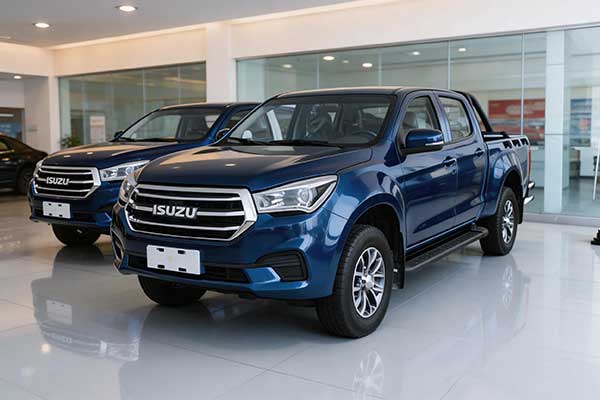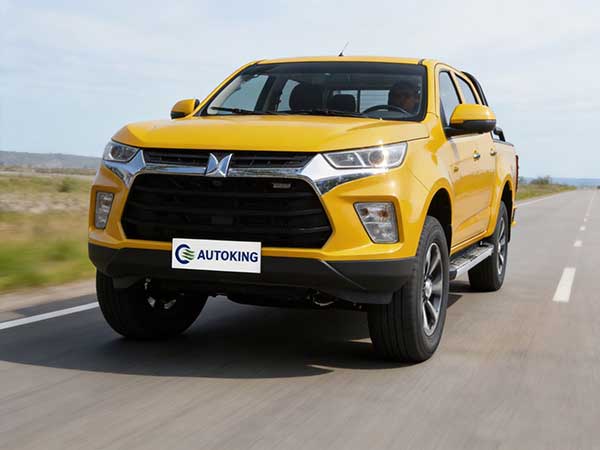


A 3–4 ton pickup truck is designed for users who require significantly higher payload capacity than standard light-duty pickups. These vehicles are commonly used in construction material transport, agricultural supply delivery, mining support, municipal maintenance, and industrial logistics, where heavier loads must be carried while maintaining the flexibility of a pickup-style vehicle.
Compared with a 1–2 ton pickup truck, a 3–4 ton pickup typically features a reinforced ladder-frame chassis, stronger suspension system, and larger cargo capacity, allowing it to handle heavier materials such as equipment, bulk goods, or building supplies. While 1–2 ton pickups are often preferred for urban logistics and small business transport due to their lighter weight and easier maneuverability, the 3–4 ton category focuses more on heavy-duty working environments.
Fuel consumption is naturally higher because of the increased payload capability and stronger powertrain. A typical 3–4 ton pickup truck may consume around 10–12 L/100 km, compared with 8–9 L/100 km for most 1–2 ton pickup trucks. However, when considering the amount of cargo transported per trip, the larger pickup often delivers better economic efficiency, especially for businesses that regularly move heavy loads. This balance of higher payload capacity and operational practicality makes 3–4 ton pickups a cost-effective solution for demanding commercial applications.