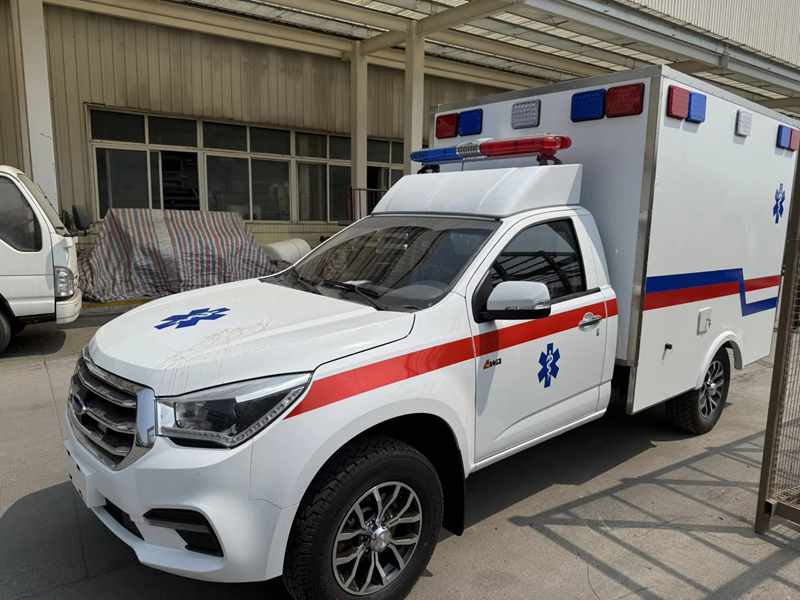


The ambulance van emerges as a versatile emergency vehicle, designed to navigate tight urban streets, suburban neighborhoods, and crowded areas with the agility that larger emergency vehicles often lack. Built on a compact van chassis, it balances maneuverability with essential medical functionality, making it a go-to choice for rapid response in cities, towns, and communities where quick access to patients can mean the difference between life and death. Its streamlined design allows it to weave through traffic, park in narrow spaces, and reach locations—like inner-city apartments or suburban cul-de-sacs—that are challenging for bulkier emergency vehicles.
Equipped with a fully optimized medical compartment, the ambulance van packs critical care tools into a space-efficient layout. Core equipment includes lightweight hydraulic stretchers, portable oxygen cylinders, defibrillators, basic ventilators, and organized storage for medications and trauma kits—all secured to withstand sudden stops or sharp turns during transit. The cabin is designed to accommodate 1-2 medical staff, with ergonomic seating and easy access to equipment, enabling teams to deliver focused care while the vehicle is in motion. Large side and rear doors facilitate quick loading and unloading of patients, streamlining the transition from on-site care to hospital transport.
Key features enhance its reliability and adaptability for everyday emergency use: bright LED beacon lights and multi-tone sirens cut through urban noise to alert traffic, while fuel-efficient engines reduce operational costs for healthcare providers. Climate control systems maintain stable temperatures for both patients and sensitive medical equipment, ensuring comfort and functionality in all weather conditions. The vehicle’s compact size also simplifies maintenance and parking when not in use, making it a practical addition to emergency fleets with limited storage space.
For urban and suburban emergency medical services, the ambulance van is an indispensable asset. It combines the speed and agility needed to navigate congested areas with the medical capabilities required to stabilize patients en route to hospitals. Whether responding to a household emergency, a traffic accident, or a medical crisis in a crowded district, it delivers timely, life-saving support where larger vehicles cannot. Its blend of practical design and critical care functionality makes it a cornerstone of community healthcare, ensuring that emergency help is never out of reach in the places people live, work, and travel.