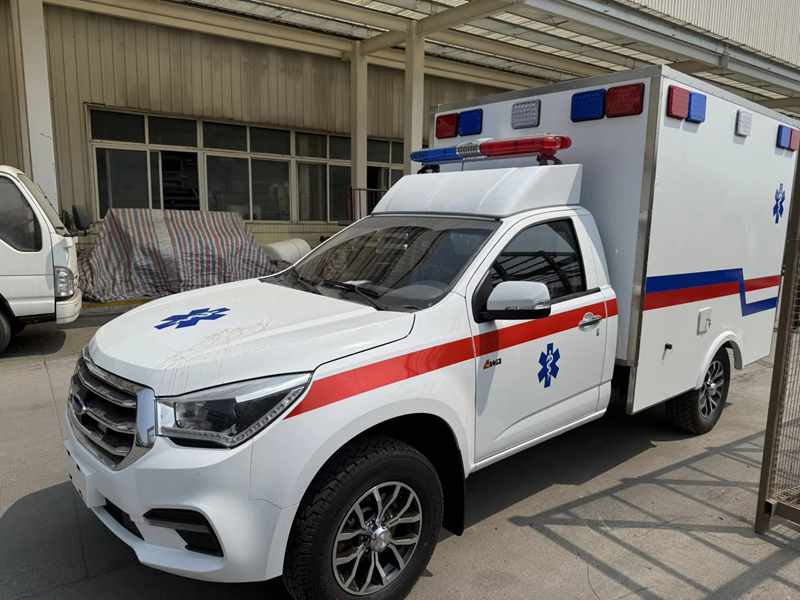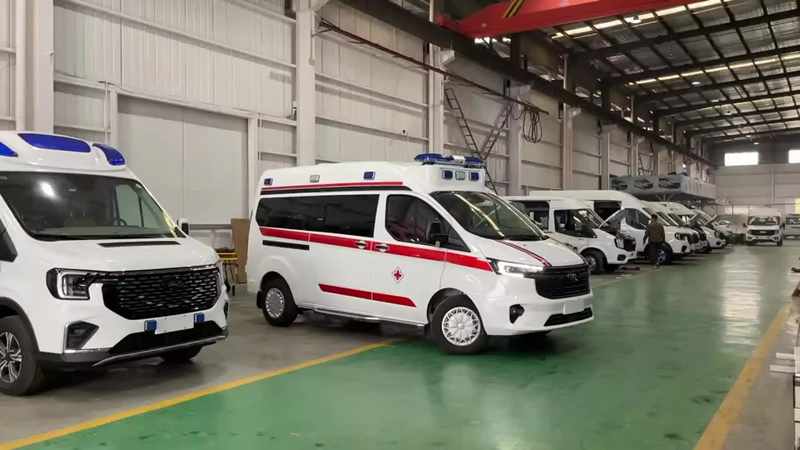


An ambulance truck stands as a vital heavy-duty solution for emergency medical services, engineered to deliver critical care in locations where standard ambulances cannot operate. Built on a robust commercial truck framework, it combines exceptional off-road capability, extended range, and ample load capacity to serve remote regions, disaster zones, and areas with challenging terrains. Whether navigating unpaved rural roads, mountainous landscapes, or flood-affected areas, this specialized vehicle ensures that life-saving medical support reaches communities otherwise cut off from timely healthcare.
At its core, the ambulance truck features a durable chassis optimized for stability and resilience, with 4×4 or 6×6 drive systems, high ground clearance, and reinforced suspension to handle rough conditions. The medical compartment is thoughtfully designed to accommodate essential care equipment, including hydraulic stretchers, oxygen supply systems, defibrillators, portable ventilators, and temperature-controlled storage for medications. Spacious enough for 2-3 medical personnel, the interior balances functionality with comfort, allowing teams to deliver focused care during transit while storing additional supplies for extended missions.
Key design elements enhance its practicality for global use: 360° LED beacon lights and high-decibel sirens ensure visibility in chaotic scenarios, while corrosion-resistant materials protect against extreme climates—from scorching deserts to freezing high altitudes. Adaptable to regional needs, it offers left or right-hand drive options and intuitive controls, making it easy for local medical teams to operate. With a focus on reliability, the vehicle’s construction minimizes maintenance needs, even in areas with limited service infrastructure, ensuring it remains operational when emergencies strike.
For communities and organizations prioritizing accessible emergency care, the ambulance truck is more than a vehicle—it’s a lifeline. It empowers healthcare providers to respond swiftly to crises, deliver care in underserved areas, and support disaster relief efforts, proving indispensable in bridging the gap between medical resources and those in need. Its blend of rugged performance and medical functionality makes it a cornerstone of emergency response systems worldwide, offering peace of mind that help can reach even the most remote locations.