




A fire department rescue truck plays a crucial role in today’s emergency operations, serving as a multifunctional unit designed to support diverse rescue missions. While its name suggests a focus on fire-related incidents, this vehicle is engineered to handle far more—technical rescues, hazardous situations, traffic emergencies, and urban search-and-rescue scenarios. As response environments become more complex, the demand for flexible, equipment-rich rescue vehicles has grown significantly.
What sets this category of truck apart is its capacity to transport personnel, specialized rescue tools, stabilization devices, and medical equipment. For fire departments operating in dense cities or remote communities, the fire department rescue truck ensures readiness for unpredictable, high-pressure situations.
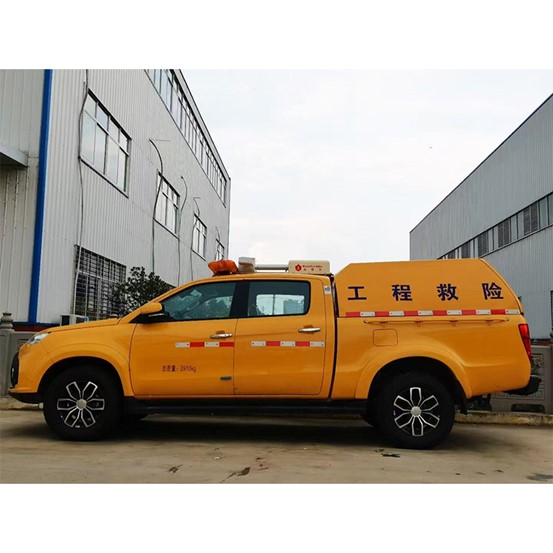

Because of its versatility, the fire department rescue truck is deployed in a broad range of emergency environments. Urban departments use it to respond to road collisions, building entrapments, and mechanical failures in high-rise facilities. In rural and suburban areas, it provides support for water rescues, agricultural accidents, and remote-area extrications.
Industrial zones also rely on this type of truck, particularly where machinery entrapments, chemical incidents, or mass-casualty risks are possible. Its adaptability allows teams to operate efficiently regardless of whether the incident involves fire suppression or purely technical intervention.
The primary benefit of a fire department rescue truck is operational efficiency. By combining multiple rescue functions into a single platform, fire departments minimize response times and reduce the need for deploying several specialized units. Another advantage is the improved coordination it supports—crews can travel together with all essential tools at hand, creating faster on-scene readiness.
Additionally, modern rescue trucks are built with enhanced ergonomics. Tool mounting systems, low-step designs, and optimized interior layouts help responders retrieve equipment quickly and safely. The truck also strengthens community resilience by enabling departments to respond to incidents beyond fires, reinforcing its role as a backbone of public safety.
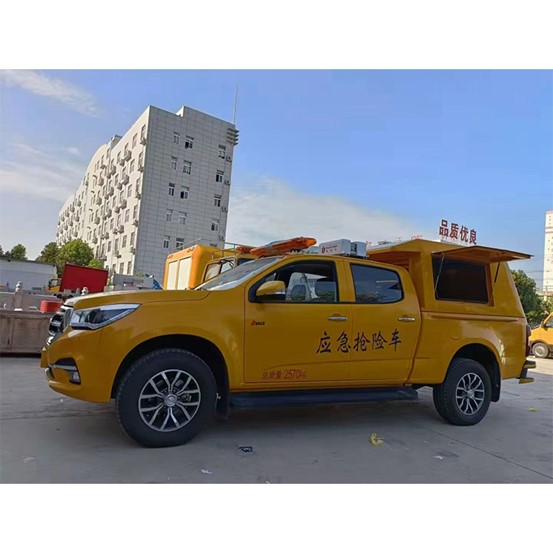
The following table summarizes typical configurations found in a standard fire department rescue truck. Specifications may vary among models and regional requirements, but these values represent commonly equipped units.
| Specification | Typical Range / Feature |
|---|---|
| Chassis Type | Medium to heavy-duty rescue chassis |
| Engine Output | 250–450 hp |
| Crew Capacity | 4–6 personnel |
| Storage Compartments | Modular exterior & interior rescue cabinets |
| Hydraulic Tool Support | Integrated power units for cutters, spreaders, and rams |
| Lighting System | LED light towers, floodlights, perimeter lighting |
| Rescue Equipment Mounting | Custom shelves, slides, and roll-out trays |
| Water/Fire Suppression | Optional light pump or no pump, depending on configuration |
A fire department rescue truck is much more than a support vehicle—it is a frontline asset that enhances a department’s ability to respond to complex emergencies. Its versatility, equipment capacity, and operational reliability make it indispensable for modern fire and rescue organizations. If you’re exploring options for upgrading or acquiring a rescue truck, I can help you compare configurations or prepare customized content tailored to your department’s needs.
